
本草纲目
Bencao Gangmu
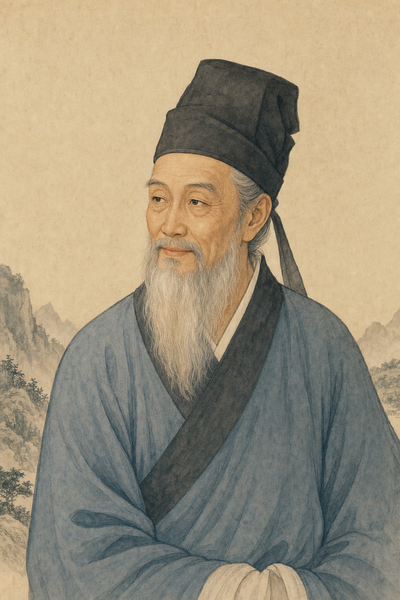
Imagine spending twenty-seven years of your life on a single research project. Imagine traveling thousands of miles on foot and by boat, collecting specimens from mountains and marshes, interviewing f…
About This Work
Imagine spending twenty-seven years of your life on a single research project. Imagine traveling thousands of miles on foot and by boat, collecting specimens from mountains and marshes, interviewing fishermen, farmers, hunters, and herbalists — anyone who knew something about the natural world that you did not. Imagine critically reviewing over eight hundred previous scholarly works, testing their claims against your own observations, correcting their errors, discarding their superstitions, and documenting substances they had never heard of. Imagine, finally, producing a systematic catalogue of 1,892 medicinal substances — 1,094 botanical, 444 zoological, 275 mineralogical — organized into a rational taxonomy, with each entry describing the substance's identification, geographic distribution, collection and preparation methods, therapeutic properties, clinical applications, and known toxicities. That is what Li Shizhen accomplished when he published the Bencao Gangmu in 1596, three years after his death. And you ask me whether China had science? Li Shizhen's methodology was recognizably modern in its commitment to firsthand verification. He did not trust the pharmacological literature he inherited — and that literature was already centuries old, riddled with copyist errors, ambiguous identifications, and frankly dangerous claims. He tested. He compared specimens from different regions, noting variations in potency and appearance. He conducted what we would now call systematic field research, personally examining plants in their natural habitats to ensure accurate identification — because he understood that dried materia medica in an apothecary's drawer could be mislabeled, adulterated, or confused with similar-looking but pharmacologically different species. This is the same rationale that drives modern pharmacognosy: the insistence that botanical identity must be verified at the source, because taxonomic errors in medicine kill. Li Shizhen made this argument in the 16th century, and he backed it with twenty-seven years of fieldwork. He was, in essence, practicing the first large-scale quality control audit of a medical pharmacopoeia — a project that required him to be simultaneously botanist, zoologist, mineralogist, clinician, and skeptical editor. His preface acknowledges the methods explicitly: where earlier authorities disagreed, he went to the field to resolve the question. Where a substance was described in mutually contradictory ways by different sources, he collected samples and compared them. Where a claim seemed dubious — such as the belief that certain substances conferred immortality — he recorded it but noted his skepticism. This is the scientific method applied to pharmacology, and Li Shizhen practiced it with a thoroughness that would earn him tenure at any modern research university. His classification system deserves particular attention, because it reveals a taxonomic intelligence operating at the highest level. Li Shizhen organized his 1,892 substances into 16 main divisions and 60 sub-classes — a hierarchical scheme that groups substances by their natural relationships rather than by arbitrary alphabetical or utilitarian criteria. His botanical entries, for instance, are arranged by habitat and morphological similarity: grasses together, grains together, vegetables together, fruits together, trees together. Within each group, he further distinguishes species by leaf shape, flower structure, fruit type, growth habit, and ecological niche. His zoological sections follow a comparable logic, grouping animals by broad morphological categories — insects, fishes, reptiles, birds, mammals — with finer subdivisions based on observable characteristics. This is not a folk taxonomy; it is a systematic biological classification that anticipates Linnaean principles of natural grouping by over a century and a half. When Joseph Needham, the great Cambridge biochemist and historian of Chinese science, examined the Bencao Gangmu's classification scheme, he concluded that Li Shizhen's method was 'not far removed from the natural system of the present day.' The Swedish botanist Carl Linnaeus himself might have recognized a kindred spirit in Li Shizhen — both men driven by the conviction that the diversity of nature could be ordered into a rational system through patient observation and comparison. But Li Shizhen was not merely a taxonomist. He was a clinician who understood that pharmacology without clinical context is sterile classification. Each entry in the Bencao Gangmu includes not only botanical or mineralogical description but detailed therapeutic indications — what conditions the substance treats, how it should be prepared (decoction, powder, pill, plaster, tincture), at what dosage, in what combinations, and with what contraindications. He documented drug interactions, noting that certain substances potentiate or neutralize each other — a pharmacological principle that modern pharmacy formalized only in the 20th century with the study of drug-drug interactions and pharmacokinetics. He recorded adverse effects and toxicities meticulously, warning that substances like mercury, cinnabar, and aconite — frequently prescribed in earlier texts, often fatally — were dangerous and required extreme caution in preparation and dosage. He was, in effect, the world's first systematic pharmacovigilance officer: documenting therapeutic effects, side effects, and safety profiles for an entire pharmacopoeia. Every modern drug formulary, from the Physician's Desk Reference to the electronic databases that alert clinicians to potential drug interactions, owes a conceptual debt to this approach. Li Shizhen also documented hundreds of substances that were unknown to earlier Chinese pharmacological literature or were known only through garbled, contradictory descriptions. He added 374 new medicinal substances to the canon — plants, animals, and minerals that he had personally identified and tested. His entries include the first detailed Chinese descriptions of such substances as ginseng's regional varieties and their differing clinical properties; the antimalarial properties of sweet wormwood (Artemisia annua — whose active compound artemisinin would win the 2015 Nobel Prize in Medicine for Tu Youyou, a Chinese scientist who discovered it by systematically screening traditional remedies recorded in texts including the Bencao Gangmu); the use of ephedra (ma huang) for respiratory conditions, whose active compound ephedrine remains in Western pharmacopoeias today; and hundreds of other plants whose bioactive compounds are now the subject of intensive pharmacological research worldwide. The connection between Li Shizhen's fieldwork and modern drug discovery is direct, documented, and ongoing: pharmaceutical researchers continue to mine the Bencao Gangmu for leads on novel bioactive compounds, and the text remains a primary reference in ethnopharmacology — not as a historical curiosity but as a living research resource. When your pharmacology labs screen natural products for drug candidates, they are following a path that Li Shizhen blazed. The Bencao Gangmu is not beyond criticism — what scientific work is? Some of its entries reflect the cosmological assumptions of its era, incorporating five-phase correspondences and yin-yang classifications that a modern biochemist would not use. But to dismiss the entire enterprise because of its period-appropriate theoretical framework is to miss the point spectacularly. Every scientific tradition operates within a theoretical paradigm, and every paradigm is eventually superseded. What endures is the quality of the observation, the rigor of the documentation, the honesty of the methodology. On those criteria, the Bencao Gangmu stands as one of the great scientific achievements of the pre-modern world — recognized as such by UNESCO, which inscribed it in the Memory of the World Register, and by the global scientific community, which continues to treat it as a living resource rather than a relic. When I teach my students about scientific methodology, I tell them: observation, documentation, verification, classification, application. Li Shizhen did all of that, for twenty-seven years, across 1,892 substances. If that is not science, I do not know what is.
Contents · 内容
Why This Matters
This text is part of the living archive of Chinese intellectual achievement — a tradition that produced systematic astronomical observation, mathematical innovation, medical frameworks still in clinical use, and engineering at continental scale, centuries before comparable developments in Europe.
The question "did ancient China have science?" misunderstands what science is. Science is not a single cultural tradition — it is the systematic observation of nature, the rigorous documentation of phenomena, the testing of ideas against evidence, and the building of knowledge across generations. By every one of these measures, the works in this catalogue are scientific. They used different conceptual frameworks — correlative rather than mechanistic, systemic rather than reductionist — but these frameworks produced real knowledge: accurate star catalogues, effective medical treatments, precise calendar computations, and technologies that transformed civilization.