
Ancient Science
of China
中国古代科学
What if one of humanity’s largest intellectual traditions has simply become difficult to discover?
Featured
Masterpiece · Institution · Scholar
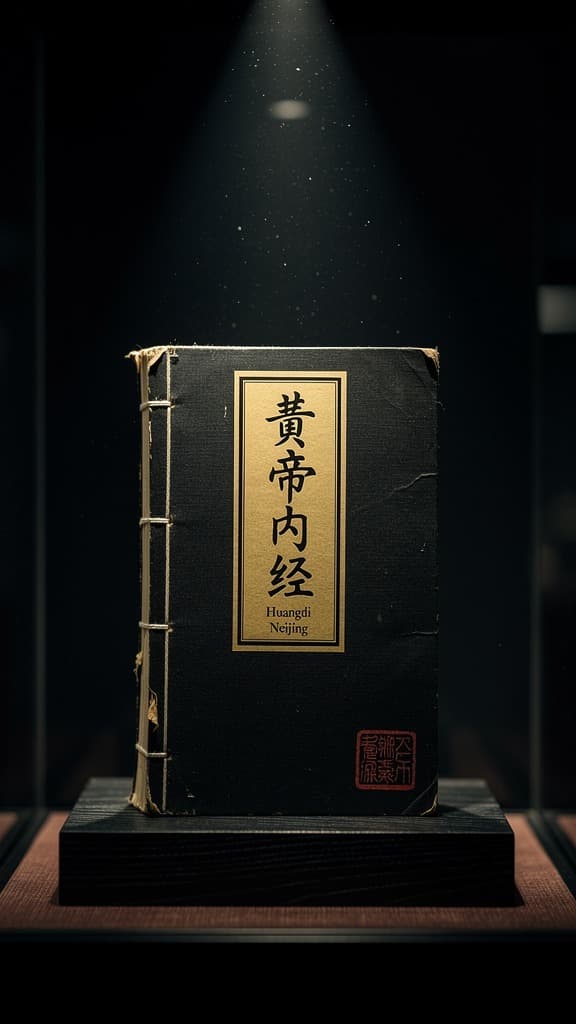
Featured Masterpiece
黄帝内经素问
Huangdi Neijing Suwen
The foundational text of Chinese medical theory, compiled between the Warring States and Han periods. Yin-yang balance, five-phase correspondence, meridian theory — two millennia of clinical guidance.
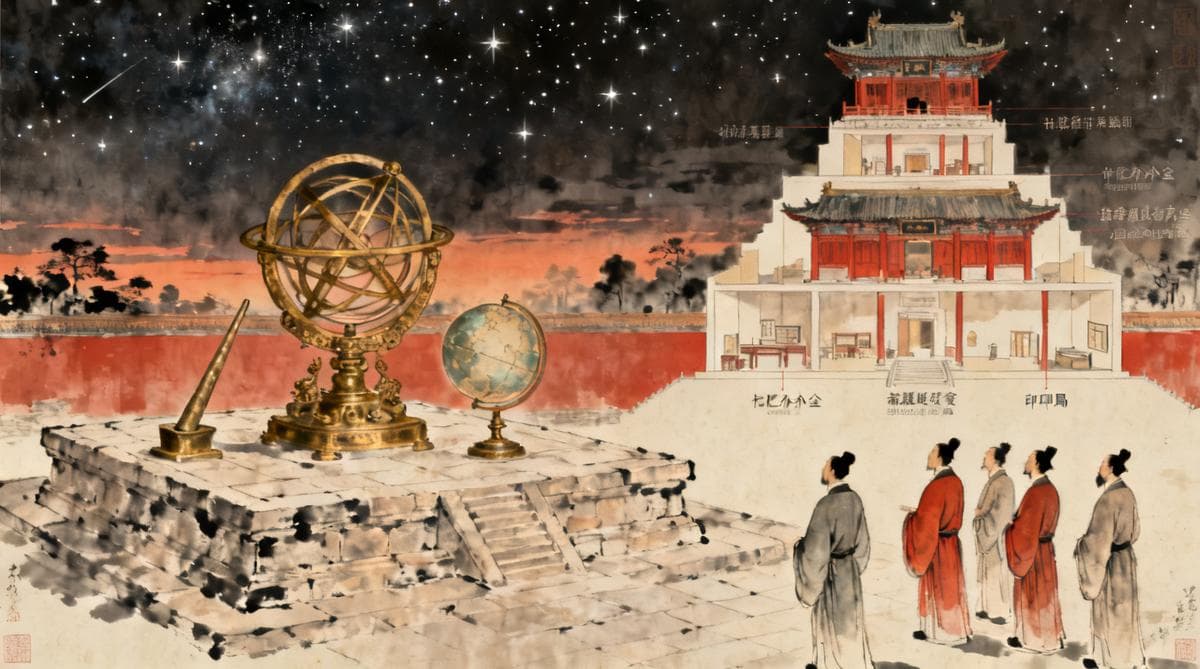
Featured Institution
钦天监
Imperial Astronomical Bureau
For over a millennium, the Bureau observed the heavens, calculated the calendar, predicted eclipses, and maintained the cosmic legitimacy of the imperial state.
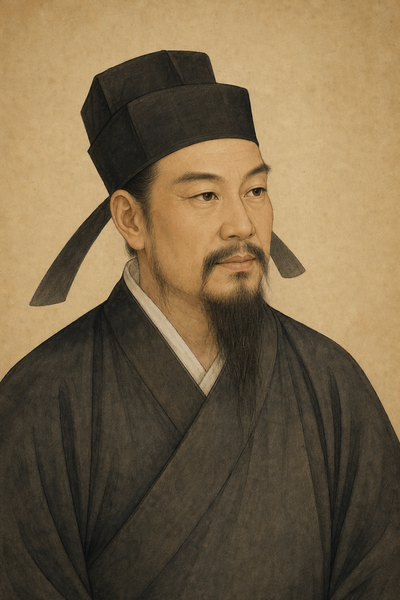
Featured Scholar
张衡
Zhang Heng · 78-139
Polymath, astronomer, and engineer of the Eastern Han. Invented the world's first seismoscope, explained lunar eclipses as Earth's shadow, and refined π to √10 ≈ 3.162.
The Archive
145 works — page 1 of 13
Dynasties of Chinese Science
Civilization River
Scroll to journey through three thousand years
Everything is connected.
Chinese intellectual traditions did not develop as isolated modern departments. Medicine drew on calendrical thinking. Astronomy served governance. Mathematics supported instruments and administration.
The Five Traditions
Five Doors to Chinese Knowledge
Each door opens to a dedicated library of canonical texts, scholars, and dynastic context.
Begin With a Question
Each question opens a curated exploration path through the intellectual landscape
Classical Chinese scholarship was not fragmented into modern departments. Medicine drew on cosmology. Astronomy served governance and agriculture. Mathematics supported engineering, taxation, and instrument design. The boundaries between fields were porous because the goal was understanding the whole — not isolating parts.
Chinese medical texts from the Han dynasty onward describe systematic correspondences between organs, seasons, emotions, and environmental factors. The Huangdi Neijing outlines diagnostic principles based on pattern recognition rather than isolated symptoms. These frameworks offer a model of the body as an integrated system.
Behind every surviving text stood an institution: the Imperial Astronomical Bureau that tracked celestial phenomena, the Imperial Medical Academy that trained court physicians, the Directorate of Waterways that managed flood control. Knowledge was produced through organised state patronage and multi-generational scholarly lineages.
Shen Kuo, Song Yingxing, Li Shizhen, Zhang Heng — these were not narrow specialists. They were astronomers who wrote on geology, physicians who compiled botanical encyclopedias, engineers who designed astronomical instruments. Their lives reveal a model of intellectual inquiry that refused to separate the natural world from human understanding.
Chinese natural philosophy did not draw a hard boundary between observer and observed. The Yijing described change as a universal pattern. Medicine understood health as a relationship between body and environment. This integration — often misunderstood — represents a coherent and empirically grounded way of knowing.
The Archive Awaits
148 works catalogued across 6 traditions — search and filter the complete collection
Recent Discoveries
Newly added works, scholars, and institutions across the five traditions and Ge Wu sciences.
Editor’s Selection
A rotating group of foundational and overlooked texts.
Random Journey
Enter the catalogue without choosing a starting point.
Open the Full Archive
Search and filter every work, scholar, institution, dynasty, and concept.