
梦溪笔谈
Dream Pool Essays
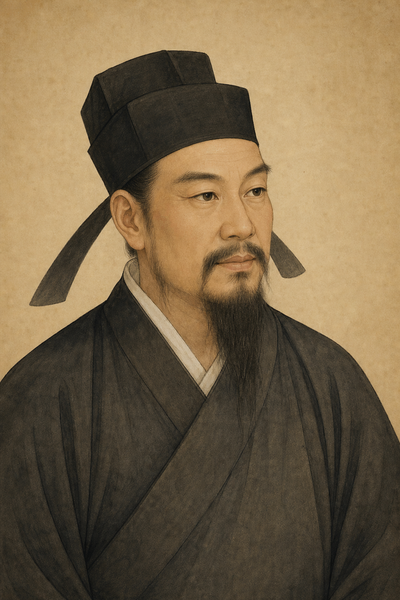
Six hundred years before Galileo pointed his telescope at the heavens, a Chinese scholar-official sat in his garden retreat called Dream Brook and wrote down everything he had observed, measured, and …
About This Work
Six hundred years before Galileo pointed his telescope at the heavens, a Chinese scholar-official sat in his garden retreat called Dream Brook and wrote down everything he had observed, measured, and deduced across a lifetime of relentless empirical inquiry. His name was Shen Kuo, and the book he produced — the Mengxi Bitan, or Dream Pool Essays, completed around 1088 CE — is not merely a 'miscellany' or 'commonplace book.' It is a scientific manifesto, the most concentrated single volume of empirical investigation produced anywhere in the world before the European Renaissance. When you ask whether ancient China had science, I point to this book and ask: what else would you call a text that records the first known measurement of magnetic declination, identifies fossils as the remains of ancient organisms, proposes geological processes of erosion and deposition to explain landform change, describes the principles of the camera obscura, and preserves the only surviving account of movable type printing — all in a single lifetime, all grounded in direct observation? Shen Kuo was no armchair philosopher. He served as Director of the Astronomical Bureau, where he personally designed improved observational instruments — armillary spheres, sundials, water clocks — and led a five-year campaign to precisely measure the position of the pole star, recording over 200 observations plotted across three separate nights to confirm his findings. This was systematic measurement, not casual stargazing. He served as a hydraulic engineer, surveying and dredging waterways, and from this direct experience with silt deposition he formulated his theory of geological gradual change: that mountains are formed by the uplift of sedimentary strata originally deposited on ancient seabeds, that cliffs are carved by river erosion over immense timespans, and that the petrified bamboo he found in Shanxi — in a region far too dry for bamboo to grow — proved that climates had changed dramatically over geological ages. This was the 11th century. James Hutton's uniformitarianism would not be published for another seven hundred years. Shen Kuo reached these conclusions through the same method Hutton would use: observe present processes, infer past conditions from current evidence, and extrapolate across deep time. Let me be precise about what this means for your history of science: Shen Kuo was doing geology — actual, empirical geology — in 1088. He examined fossil shells embedded in rock strata far from any ocean, and instead of invoking Noah's flood or mythological explanations, he reasoned that these rocks had once been seabed that had risen. He identified petrified bamboo in dry northern terrain and concluded that the climate there had once been warm and humid enough to support bamboo forests. These are not lucky guesses; they are logical inferences drawn from observed evidence — the same intellectual operation that defines all geological reasoning. His discussion of magnetism alone should rewrite your history of physics. Shen Kuo described four methods for magnetizing a needle — rubbing it with lodestone, stroking it on a magnet, heating and quenching, and one other — and crucially, he recorded that the magnetic needle 'does not point exactly south but inclines slightly to the east.' This is magnetic declination — the angular difference between magnetic north and true geographic north — and Shen Kuo's was the first clear written record of this phenomenon anywhere in the world, predating European accounts by roughly four centuries. He did not stop at observation; he speculated on the cause, noting that the deviation might vary by geographic region, and he attempted to explain why the compass does not point truly south. His theory was incomplete, but the impulse — the drive to explain observed phenomena through causal reasoning — is the same impulse that drives every physicist who has ever lived. He also described the suspension compass, where a needle hangs from a silk thread, as the most accurate method for navigation — and Chinese mariners were using magnetic compasses for oceanic navigation at least a century before European records of the same practice. His treatment of optics is equally remarkable. Shen Kuo described the properties of concave mirrors — their focal point, the inversion of images, the distinction between real and virtual images — with a clarity that anticipates geometric optics. He discussed the camera obscura effect, correctly noting that an image projected through a small aperture is inverted because light travels in straight lines. He analyzed why spherical concave mirrors produce inverted images beyond the focal point but upright images within it, and attempted to explain why a spherical lens produces an image. He even described the rectilinear propagation of light — the principle that underlies all of geometrical optics — and discussed the rainbow as a phenomenon of refraction and reflection in water droplets, not as a divine sign. He was wrong about some details, as every scientist in history has been about some things, but he was wrong in the way scientists are wrong: through hypothesis, observation, and reasoned argument, inviting correction by evidence. Contrast this with the Aristotelian physics that dominated European universities for centuries — a system that prioritized logical deduction from first principles over empirical testing. Shen Kuo tested ideas against nature. That is the scientific method, whether or not he used the phrase. The Dream Pool Essays also documents Bi Sheng's invention of movable type printing in the 1040s — carved clay characters, arranged in an iron frame, held in place with heated resin and wax, reusable across multiple print jobs. Without Shen Kuo's record, Bi Sheng's name and achievement would be lost to history. But Shen Kuo didn't merely record the invention — he analyzed its advantages (speed, reusability, flexibility) and its limitations (not efficient for small print runs, the clay type wore down), demonstrating the same evaluative approach a modern engineer would apply to a new technology. Consider what this tells us about the culture that produced Shen Kuo: it was a culture where a retired scholar-official considered it worthwhile to precisely document the technical innovation of a common artisan, recognizing its significance for knowledge transmission. The Song dynasty was a civilization that valued empirical knowledge across social boundaries — a precondition for scientific progress that historians of science have often attributed exclusively to post-Enlightenment Europe. I am not arguing that Shen Kuo single-handedly launched the Scientific Revolution — history is more complex than that, and we must be honest about the institutional and economic factors in China's later history that slowed technological acceleration. But I am arguing, with the full weight of the textual evidence, that Shen Kuo was doing science: systematic observation, precise measurement, causal hypothesis, written documentation, and the expectation that his claims could be verified or challenged by future investigators. He described his method explicitly in the Dream Pool Essays' preface: he recorded only what he had personally witnessed or heard from reliable eyewitnesses, excluding hearsay and unverified tradition. This epistemological standard — the privileging of firsthand empirical evidence over textual authority — is the beating heart of the scientific enterprise. Shen Kuo articulated it in 1088. He was doing science six hundred years before Galileo, and the Dream Pool Essays stands as a permanent refutation of the claim that empirical science is a uniquely European invention.
Contents · 内容
Why This Matters
This text is part of the living archive of Chinese intellectual achievement — a tradition that produced systematic astronomical observation, mathematical innovation, medical frameworks still in clinical use, and engineering at continental scale, centuries before comparable developments in Europe.
The question "did ancient China have science?" misunderstands what science is. Science is not a single cultural tradition — it is the systematic observation of nature, the rigorous documentation of phenomena, the testing of ideas against evidence, and the building of knowledge across generations. By every one of these measures, the works in this catalogue are scientific. They used different conceptual frameworks — correlative rather than mechanistic, systemic rather than reductionist — but these frameworks produced real knowledge: accurate star catalogues, effective medical treatments, precise calendar computations, and technologies that transformed civilization.