
天工开物
Tiangong Kaiwu
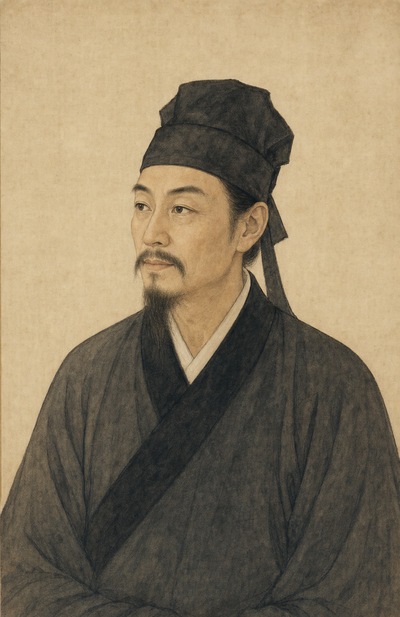
Picture a scholar who has spent decades memorizing the Confucian classics, who has repeatedly failed the civil service examinations that were the only path to prestige and power in Ming dynasty China …
About This Work
Picture a scholar who has spent decades memorizing the Confucian classics, who has repeatedly failed the civil service examinations that were the only path to prestige and power in Ming dynasty China — and who, instead of retreating into bitterness, turns his formidable intellect toward the world that the literati had always dismissed: the world of farmers, weavers, potters, blacksmiths, salt-makers, and papermakers. That scholar was Song Yingxing, and the book he produced in 1637 — the Tiangong Kaiwu, 'The Exploitation of the Works of Nature' — is one of the most radical documents in the history of applied science. It is not merely an encyclopedia of technology. It is a philosophical argument, rendered in precise prose and 123 vivid woodblock illustrations, that the knowledge of working people constitutes genuine understanding of nature — and that a civilization that ignores this knowledge impoverishes itself. Let me be direct about what this book contains. Across eighteen chapters, Song Yingxing systematically documents over 130 production technologies: the cultivation and processing of rice, wheat, and other grains, including detailed instructions on seed selection, planting depth, irrigation scheduling, and harvest timing; the full textile chain from cotton and silk cultivation through spinning, weaving, and dyeing, with specifications for loom design and fabric finishing; ceramic production from clay selection through kiln firing, including the techniques that produced imperial porcelain — glaze formulations, firing temperatures, kiln atmosphere control — that European potters could not replicate for another century; the entire metallurgical sequence — mining, smelting, casting, forging — for iron, copper, silver, lead, tin, and zinc, including the remarkable Chinese process for smelting zinc from its ore, which was not achieved in Europe for another century; papermaking from raw fiber through sheet formation, with recipes for different paper grades; salt production by solar evaporation, brine boiling, and the ingenious percussion drilling of deep brine wells in Sichuan that reached depths exceeding a hundred meters; sugar refining; vegetable oil pressing; shipbuilding; weapons manufacturing, including gunpowder formulations and early firearms; brewing and fermentation; and the harvesting of pearls and jade. Each process is described with precise attention to materials, proportions, temperatures, timing, and quality indicators — the same parameters any modern chemical engineer would specify in a process description. What makes the Tiangong Kaiwu genuinely scientific, rather than merely descriptive, is its theoretical ambition. Song Yingxing did not simply list techniques; he sought to explain why they worked. His preface articulates a philosophy that anticipates the applied sciences: understanding nature (tian, heaven) requires engaging with its works (gong, labor) and opening them up (kaiwu) through technique. He argued explicitly that the principles governing the natural world could be grasped through the technologies that transform it — that the potter's understanding of clay and fire, the blacksmith's knowledge of carbon content and quenching, the farmer's grasp of soil chemistry and water management, all constituted forms of scientific knowledge equal in epistemological dignity to classical scholarship. In his own words, the book was meant to document 'the ingenious creations of heaven and earth and the exquisite skills of human hands' — placing human technical achievement on the same plane as natural creation. This was a revolutionary position in a society where manual labor was traditionally regarded as beneath the dignity of educated men. Song Yingxing was arguing, in effect, for the unity of theory and practice — the same principle that Francis Bacon was advancing in Europe at roughly the same historical moment. But unlike Bacon, who wrote programmatically about a new method of science without actually performing much of it, Song actually documented the practices. He did the work. His treatment of specific technologies reveals a rigorous empirical mind. In discussing the manufacture of lime and cement, he specifies the exact proportions of raw materials, the necessary burning temperatures, and the quality tests for the finished product — including the observation that lime burned from certain types of stone produces superior binding properties. In his chapter on metallurgy, he distinguishes between the properties of different iron alloys based on their carbon content — describing cast iron (high carbon, brittle, suitable for pots and plowshares), wrought iron (low carbon, malleable, suitable for tools and weapons), and steel (intermediate carbon, combining hardness with toughness) as different states of the same material system, and detailing how repeated heating and forging could progressively decarburize cast iron into steel. This is a metallurgical classification that reflects genuine understanding of the iron-carbon phase diagram, not superficial description. His discussion of zinc smelting is particularly remarkable: zinc vaporizes at temperatures below its ore's reduction point, so smelting requires a specialized downward-condensation retort that captures the metallic vapor before it escapes. Song describes this process in technical detail — the sealed crucible, the condenser tube, the collection of condensed metal — demonstrating an understanding of phase-change chemistry and process engineering that would not be formalized in Europe for generations. He even notes regional variations in technique, comparing the superior ceramics of Jingdezhen with the coarser slipwares of other regions, and explaining the differences in terms of local clay composition, kiln architecture, and firing practice — a comparative technological analysis that any modern materials scientist would recognize as genuine scientific discourse. He was not merely a chronicler; he was a comparative technologist, analyzing why some regions produced superior goods and identifying the material and process variables that determined quality. The illustrations alone make the Tiangong Kaiwu a landmark in scientific communication. Each woodblock print shows workers engaged in specific technical operations, with tools, workspaces, and material flows clearly delineated. These are not generic genre scenes or idealized depictions; they are technical diagrams designed to convey process knowledge visually, complementing the textual descriptions with precise visual information about tool geometry, workspace layout, and operator positioning. The combination of precise prose and explanatory illustration anticipates the modern scientific textbook. When I compare these images with the sketchy, often fantastical illustrations in contemporary European technical manuscripts, the difference in observational accuracy is dramatic. Song Yingxing was documenting real industrial processes at scale, with an engineer's eye for the relevant details. The Tiangong Kaiwu also records technologies that would not reach Europe for decades or centuries: the multiple-tube seed drill for precise planting at controlled depths, the square-pallet chain pump for irrigation powered by water wheels or animal labor, the water-powered bellows for blast furnace operation — a reciprocal piston mechanism that delivered a continuous blast of air, enabling higher furnace temperatures and more efficient iron production, the deep percussion drilling of brine wells to depths exceeding 100 meters using bamboo cables and iron bits — the same fundamental percussion drilling technology that would later power the petroleum industry, the sophisticated lock-and-dam systems for canal navigation, the production of case-hardened steel through repeated forging and quenching cycles. These were not isolated inventions; they were elements of an integrated technological system that sustained the world's largest and most productive pre-industrial economy. Song Yingxing documented this system not as a curiosity or a collection of quaint crafts, but as a body of knowledge deserving of serious intellectual engagement — and he did so with a methodological rigor that makes the Tiangong Kaiwu a direct ancestor of the applied sciences. He was wrong about some things — his chemistry, inevitably, was pre-modern — but he was wrong in the way a scientist is wrong: through honest observation and rational inference, leaving a record that subsequent investigators could consult, verify, and correct. When I read modern industrial process descriptions — with their flowcharts, material balances, and quality assurance checkpoints — I see the intellectual structure that Song Yingxing pioneered in 1637. The tools are different. The method is the same. That is the scientific tradition at work, and it did not begin in Europe.
Contents · 内容
Why This Matters
This text is part of the living archive of Chinese intellectual achievement — a tradition that produced systematic astronomical observation, mathematical innovation, medical frameworks still in clinical use, and engineering at continental scale, centuries before comparable developments in Europe.
The question "did ancient China have science?" misunderstands what science is. Science is not a single cultural tradition — it is the systematic observation of nature, the rigorous documentation of phenomena, the testing of ideas against evidence, and the building of knowledge across generations. By every one of these measures, the works in this catalogue are scientific. They used different conceptual frameworks — correlative rather than mechanistic, systemic rather than reductionist — but these frameworks produced real knowledge: accurate star catalogues, effective medical treatments, precise calendar computations, and technologies that transformed civilization.