
针灸甲乙经
Zhenjiu Jiayi Jing
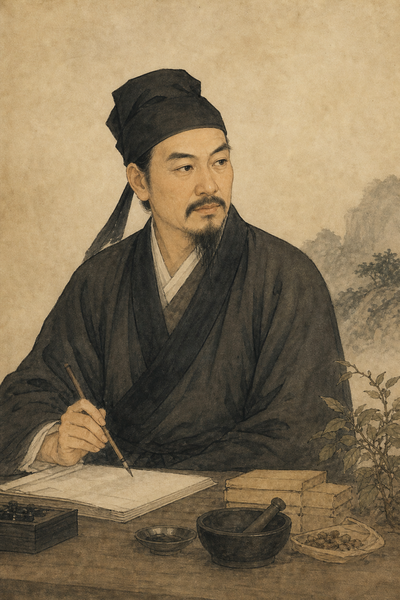
The Systematic Classic of Acupuncture and Moxibustion, compiled by Huangfu Mi (256–282 CE), standardizes 349 acupuncture points with anatomical locations, needling depths, and clinical indications. Or…
About This Work
The Systematic Classic of Acupuncture and Moxibustion, compiled by Huangfu Mi (256–282 CE), standardizes 349 acupuncture points with anatomical locations, needling depths, and clinical indications. Organized by body region and disease category, it resolved contradictions among earlier sources and transformed acupuncture from oral tradition into a teachable, reproducible clinical discipline.
Contents · 内容
Why This Matters
This text is part of the living archive of Chinese intellectual achievement — a tradition that produced systematic astronomical observation, mathematical innovation, medical frameworks still in clinical use, and engineering at continental scale, centuries before comparable developments in Europe.
The question "did ancient China have science?" misunderstands what science is. Science is not a single cultural tradition — it is the systematic observation of nature, the rigorous documentation of phenomena, the testing of ideas against evidence, and the building of knowledge across generations. By every one of these measures, the works in this catalogue are scientific. They used different conceptual frameworks — correlative rather than mechanistic, systemic rather than reductionist — but these frameworks produced real knowledge: accurate star catalogues, effective medical treatments, precise calendar computations, and technologies that transformed civilization.