
南华真经
Zhuangzi
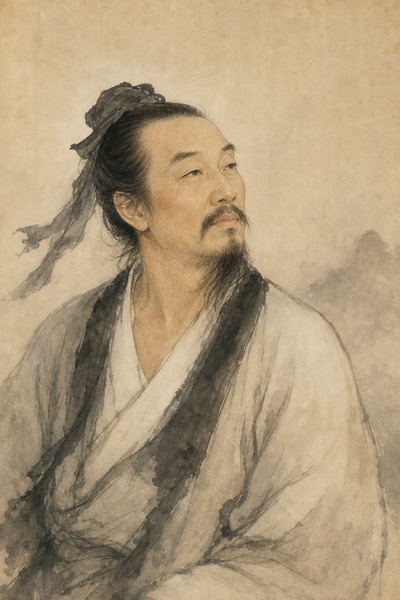
The second great pillar of Daoist philosophy, attributed to Zhuang Zhou (c. 4th century BCE). Where the Tao Te Ching is terse and aphoristic, the Zhuangzi is playful, paradoxical, and deeply literary …
About This Work
The second great pillar of Daoist philosophy, attributed to Zhuang Zhou (c. 4th century BCE). Where the Tao Te Ching is terse and aphoristic, the Zhuangzi is playful, paradoxical, and deeply literary — using fables, jokes, and dream sequences to dissolve rigid distinctions between self and world, life and death, human and nature. Its most famous passage — Zhuang Zhou dreaming he was a butterfly, then wondering if he is a butterfly dreaming he is Zhuang Zhou — remains one of philosophy's deepest meditations on consciousness and the nature of reality. Its radical perspectivism and ecological vision resonate powerfully with contemporary cognitive science and environmental thought.
Contents · 内容
Why This Matters
This text is part of the living archive of Chinese intellectual achievement — a tradition that produced systematic astronomical observation, mathematical innovation, medical frameworks still in clinical use, and engineering at continental scale, centuries before comparable developments in Europe.
The question "did ancient China have science?" misunderstands what science is. Science is not a single cultural tradition — it is the systematic observation of nature, the rigorous documentation of phenomena, the testing of ideas against evidence, and the building of knowledge across generations. By every one of these measures, the works in this catalogue are scientific. They used different conceptual frameworks — correlative rather than mechanistic, systemic rather than reductionist — but these frameworks produced real knowledge: accurate star catalogues, effective medical treatments, precise calendar computations, and technologies that transformed civilization.