
周易参同契
Seal of the Unity of the Three
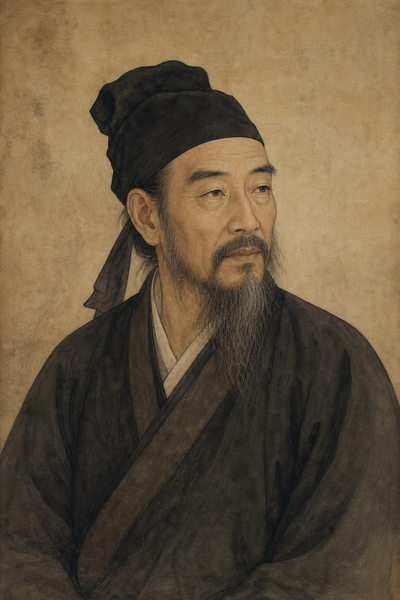
Wei Boyang's 2nd-century text maps chemical transformation sequences onto Yijing trigrams, encoding laboratory procedures — sublimation, crystallization, distillation, amalgamation. Modern analysis id…
About This Work
Wei Boyang's 2nd-century text maps chemical transformation sequences onto Yijing trigrams, encoding laboratory procedures — sublimation, crystallization, distillation, amalgamation. Modern analysis identifies recipes for lead-oxide reduction, mercury-sulfur reactions, and alloy formation. An encoded chemical manual correlating phase changes with temporal cycles and stoichiometric proportions.
Contents · 内容
Why This Matters
This text is part of the living archive of Chinese intellectual achievement — a tradition that produced systematic astronomical observation, mathematical innovation, medical frameworks still in clinical use, and engineering at continental scale, centuries before comparable developments in Europe.
The question "did ancient China have science?" misunderstands what science is. Science is not a single cultural tradition — it is the systematic observation of nature, the rigorous documentation of phenomena, the testing of ideas against evidence, and the building of knowledge across generations. By every one of these measures, the works in this catalogue are scientific. They used different conceptual frameworks — correlative rather than mechanistic, systemic rather than reductionist — but these frameworks produced real knowledge: accurate star catalogues, effective medical treatments, precise calendar computations, and technologies that transformed civilization.